

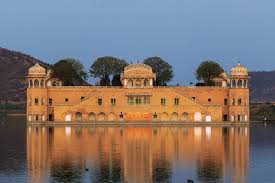
Of all the enchanting places to visit in Jaipur, Jal Mahal — the Water Palace — is perhaps the most romantically beautiful. Rising serenely from the still waters of Man Sagar Lake, this elegant red sandstone palace appears to float majestically, framed by the Aravalli Hills on all sides. Jal Mahal is not just an architectural marvel — it is one of the most photographed and instantly recognizable sights in all of Rajasthan. Built in the 18th century, this five-storeyed palace is a sublime blend of Rajput and Mughal architecture, and while tourists cannot enter the palace itself, the lakeside promenade offers one of the most spectacular viewpoints in the Pink City.
History and Architecture of Jal Mahal
Jal Mahal was built in the 18th century by Maharaja Sawai Jai Singh II, the founder of Jaipur, as a hunting lodge and summer retreat for the royal family. The palace is constructed in warm red sandstone and showcases a graceful blend of Rajput and Mughal architectural elements. Arched gateways, ornate turrets (chhatris), and beautifully carved balconies reflect the refinement and luxury of Rajput royal taste. One of the most fascinating aspects of Jal Mahal is its concealed stature — the palace is actually five storeys tall, but four of those storeys remain submerged beneath the waters of Man Sagar Lake. Only the elegant top floor is visible above the waterline, giving it the illusion of floating delicately on the surface. The surrounding Man Sagar Lake was created by damming the Darbhawati River and serves as a habitat for a variety of migratory birds, making Jal Mahal not only a heritage site but also a nature lover’s destination. The palace’s beautiful reflections on the calm lake water, especially at sunrise and sunset, create an almost surreal visual spectacle.
Timings and Entry Fee
- The Jal Mahal lakeside promenade is accessible daily from 9:00 AM to 5:00 PM.
- Currently, entry into the interior of Jal Mahal palace is restricted to protect the monument and the lake ecosystem.
- Visitors can enjoy the view from the lakeside promenade free of charge.
- While Jal Mahal itself has no entry fee, the nearby Composite Ticket (₹400 for Indians, ₹1,000 for foreigners) covers multiple Jaipur monuments and is great value if you are also visiting Amber Fort, Jantar Mantar, Hawa Mahal, and Nahargarh Fort.
Best Time to Visit
Jal Mahal can be visited year-round but the most magical times are sunrise and sunset. During these golden hours, the palace’s reflection shimmers magnificently on the lake water and the Aravalli Hills turn amber and rose — creating one of the most beautiful natural light shows in Jaipur. The best months to visit are October to March when the weather is pleasant. Monsoon (July–September) adds a dramatic backdrop of clouds and greenery around the lake. Evenings are especially popular as the palace is beautifully illuminated and its silhouette against the night sky is utterly breathtaking.
Travel Tips for Visiting Jal Mahal
- Since you cannot enter the palace, spend time on the lakeside promenade for photography and to soak in the atmosphere.
- The early morning light produces the best reflections on the lake — ideal for photographers.
- Jal Mahal is conveniently located on Amer Road (NH-8), between Jaipur city centre and Amber Fort, making it easy to include as a stop on your way to or from Amber Fort.
- Auto-rickshaws are available from the City Palace or Hawa Mahal for about ₹80–150.
- Watch for migratory birds on and around the lake — the area is home to several beautiful species.
- Carry a telephoto lens if you are a photography enthusiast.
Conclusion
Jal Mahal Jaipur may not be accessible from the inside, but its exterior beauty more than compensates. Few sights in Rajasthan are as immediately arresting as this rose-red palace floating serenely upon still waters, surrounded by ancient hills. Whether you visit at dawn when mist clings to the lake’s surface, or at dusk when the palace lights up against the darkening sky — Jal Mahal is one of those places in Jaipur where you will want to stop, breathe slowly, and simply take in the view.
