

No visit to Jaipur is truly complete without exploring its legendary bazaars — and when it comes to vibrant, sensory-rich places to visit in Jaipur, the city’s traditional markets are as much of an attraction as its forts and palaces. Jaipur has been a center of artisanal craftsmanship for centuries, and its bustling bazaars remain the best places to find exquisite Rajasthani handicrafts, jewelry, textiles, gemstones, pottery, and leather goods. The three most iconic bazaars — Johari Bazaar, Bapu Bazaar, and Tripolia Bazaar — are clustered within the old walled city and are must-visits for every traveler.
Johari Bazaar — The Jewel Market of Jaipur
Johari Bazaar, meaning ‘Jeweler’s Market,’ is one of the oldest and most celebrated markets in Jaipur. For centuries, this bustling street has been the hub of Jaipur’s world-famous gem and jewelry trade. Jaipur is one of the world’s leading centers for gemstone cutting and polishing, and Johari Bazaar is where you can find everything from raw gemstones to exquisitely crafted Kundan, Meenakari, and Polki jewelry. Beyond jewelry, Johari Bazaar also offers beautiful Bandhani (tie-dye) textiles, traditional Rajasthani clothing, mojari (traditional leather shoes), and antique artifacts. The market comes alive in the evening when shop lights illuminate the jewelry displays in glittering splendor.
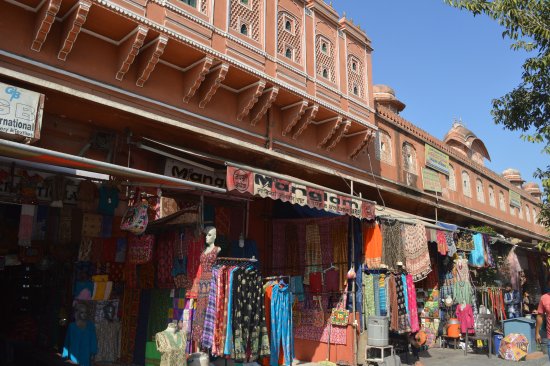
Bapu Bazaar — Textiles, Fabrics & Souvenirs
Named in honor of Mahatma Gandhi, Bapu Bazaar is one of the most popular shopping streets in Jaipur for visitors. This lively market stretches parallel to M.I. Road and is the go-to destination for Rajasthani textiles, including block-printed fabrics, Sanganer and Bagru prints, colorful dupattas, cotton suits, and traditional bedcovers. You will also find a wonderful selection of jootis (handcrafted leather footwear), puppets, miniature paintings, blue pottery items, and general souvenirs at very competitive prices. Bapu Bazaar is well known for its good bargains — most items are sold at fixed or semi-fixed rates, making it a friendly market for visitors unfamiliar with bargaining.
Timings and Practical Info
- Most bazaars in Jaipur are open from 10:00 AM to 8:00 PM.
- Many shops are closed on Sundays or take a long midday break — visiting in the evening is ideal.
- There are no entry fees for the bazaars.
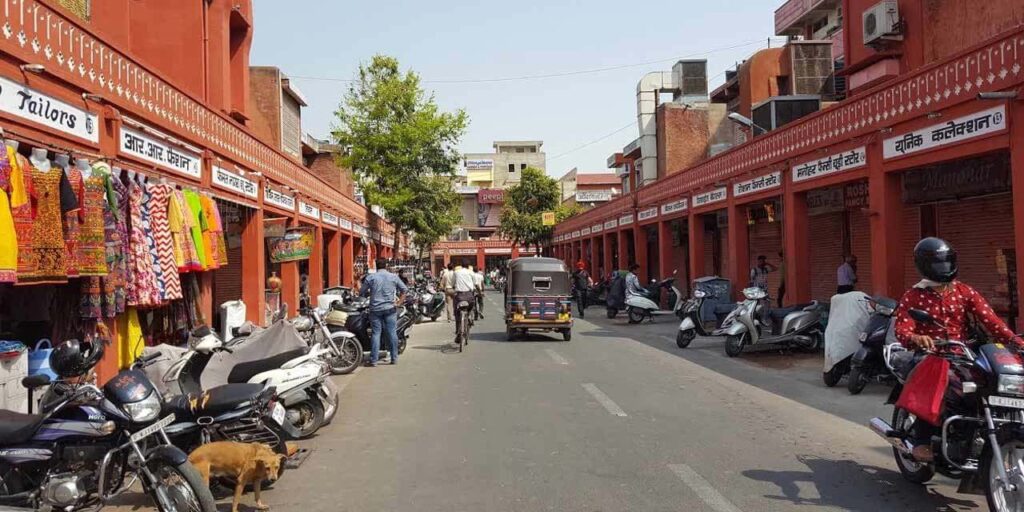
- The markets are located in the old walled city (Pink City), close to Hawa Mahal and City Palace, and are easily accessible by auto-rickshaw or on foot if you are already sightseeing in the area.
Travel Tips for Shopping in Jaipur Bazaars
- Always bargain — most vendors quote 30–50% above their acceptable price in tourist-heavy markets.
- Know your prices by visiting multiple shops before committing to a purchase.
- Be cautious of ‘gem investment schemes’ or overly insistent jewelry vendors — some gem shops in Jaipur operate scams targeting tourists.
- Stick to government-approved emporiums (Rajasthali) if you are uncertain about quality.
- Carry cash as many smaller shops may not accept cards.
- The best buys in Jaipur include block-printed textiles, blue pottery, gemstones, Kundan jewelry, leather jootis, wooden puppets, and Rajasthani miniature paintings.
Conclusion
Shopping in Jaipur’s bazaars is an adventure in color, craft, and commerce. Wandering through the narrow lanes of Johari Bazaar with its dazzling jewelry displays, or browsing Bapu Bazaar’s riot of printed textiles and handcrafted goods, is an experience that engages every sense. For travelers who want to bring home a piece of Rajasthan’s extraordinary artisanal tradition — or simply absorb the vivid, chaotic beauty of the Pink City at street level — Jaipur’s historic bazaars are among the most exciting and rewarding places to visit in Jaipur.
