

Among the impressive military fortifications that form one of the most remarkable aspects of places to visit in Jaipur, Jaigarh Fort stands as the most powerfully strategic. Perched atop the Cheel ka Teela (Hill of Eagles) in the Aravalli Range, directly above and overlooking Amber Fort, Jaigarh Fort was built primarily as a military stronghold to protect Amber Fort and the royal treasury. Constructed by Maharaja Sawai Jai Singh II in 1726, the fort derives its name from the Sanskrit ‘Jai’ (victory) and ‘Garh’ (fort) — making it literally the Fort of Victory. Jaigarh Fort is renowned worldwide for housing the Jaivana — the world’s largest cannon ever mounted on wheels.
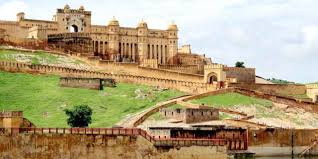
History and Architecture of Jaigarh Fort
Jaigarh Fort was built in 1726 by Maharaja Sawai Jai Singh II to provide a military umbrella over the adjacent Amber Fort. The fort is approximately 3 km long and 1 km wide — an enormous structure that follows the natural contours of the hilltop. Its thick walls, watchtowers, and cannon emplacements made it an almost impregnable military stronghold. The most famous attraction of Jaigarh Fort is undoubtedly the Jaivana Cannon — cast in 1720 within the fort’s own cannon foundry, the Jaivana is 6.15 meters long, weighs approximately 50 tonnes, and is mounted on a specially constructed wheeled carriage. It is the largest cannon on wheels ever made and was said to have been test-fired only once, using 100 kg of gunpowder, with the cannonball landing over 35 km away. The fort also contains a fascinating Arms Museum housing an impressive collection of medieval weapons, cannons, armor, and military paraphernalia. The Lakshmi Vilas, Ram Vilas, and Lalit Mandir palaces within the fort are notable for their frescoes and architectural refinement. Jaigarh Fort’s extended walls are directly connected to the walls of Nahargarh Fort, making the three forts of Jaipur — Amber, Jaigarh, and Nahargarh — part of a single, integrated defensive system.
Timings and Entry Fee
- Jaigarh Fort is open daily from 9:00 AM to 4:30 PM.
- Entry fees: Indians — ₹70 per person; Foreign tourists — ₹150 per person.
- Jaigarh Fort is included in the City Palace composite ticket (Indian/foreigner ₹190/₹500; two days), which also covers Royal Gaitor and Cenotaphs of the Maharanis.
- A vehicle entry charge applies for those driving into the fort.
- Note: Pre-wedding and commercial photography shoots are strictly prohibited without prior permission.
- An additional charge of ₹5,100 per day applies for approved shoots.
Best Time to Visit
October to March is the best time to visit Jaigarh Fort, when Jaipur’s weather is cool and pleasant. The fort is at a higher altitude than the city and can be quite cold in December and January — carry a light jacket. Mornings are the best time for photography as the soft light illuminates the fort’s ancient stone walls beautifully. The views of Amber Fort and Maota Lake from Jaigarh’s ramparts are particularly spectacular at sunrise.
Travel Tips for Visiting Jaigarh Fort
- Combine your visit to Jaigarh with Amber Fort — the two are located very close together (accessible via a connecting road), and visiting both on the same day is highly recommended.
- Wear comfortable walking shoes as the fort involves considerable walking across uneven terrain.
- Hire a local guide within the fort to understand the full military history and significance of the Jaivana Cannon and the Arms Museum.
- The fort is accessible by car or taxi — auto-rickshaws may struggle with the steep uphill road.
- Carry water and snacks as dining options within the fort are limited.
Conclusion
Jaigarh Fort Jaipur may not be as ornate as Amber Fort or as panoramically celebrated as Nahargarh Fort — but for military history enthusiasts, Jaigarh is arguably the most fascinating of Jaipur’s forts. The sheer scale of the Jaivana Cannon, the dramatic hilltop setting, the Arms Museum, and the sweeping views across the Aravalli Hills make Jaigarh Fort an essential addition to any serious exploration of the places to visit in Jaipur. It is a fort that speaks powerfully of the military genius and strategic thinking that allowed the Rajput kings to protect their beloved Pink City for centuries.
